A Local’s Guide to a Road Trip from Washington DC to Berkeley Springs
By Blue Maple · May 6, 2026
Travel guides
Hear first when this host opens direct rates or adds a new place.
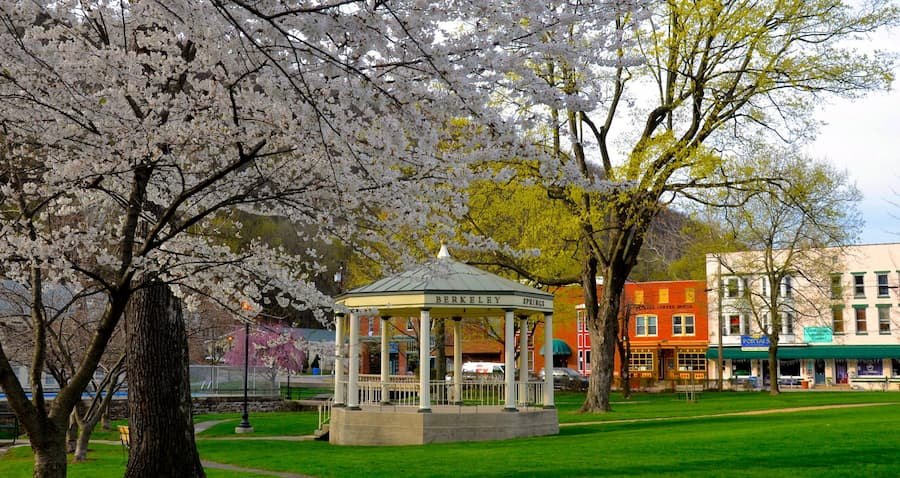
A road trip from Washington DC to Berkeley Springs is one of our favorite weekend escapes. The drive is short, around 100 miles and just under two hours without stops, but the route is packed with charming small towns, sweeping mountain views, and slow afternoons that make you wonder why you do not do this more often.
At Blue Maple, we host hundreds of guests every year who make this exact trip. Some come for the historic mineral springs, some come to unplug in our cabins, and many come for both. Over the years we have learned where to pull off, what to skip, and which little spots make the drive feel like part of the vacation.
Here is our friendly local guide to a road trip from Washington DC to Berkeley Springs, including the best route, the most worthwhile stops along the way, and a few tips to help you arrive relaxed and ready for the springs.
The most direct path runs about 100 to 105 miles and takes roughly 1 hour and 55 minutes if you drive straight through.
A small heads up: if you cross into Pennsylvania, you have gone one exit too far. Turn around and look for Exit 1B.
The interstate part of this drive is easy and well marked. The fun starts when you slow down and take the smaller roads, which is what we recommend whenever possible.
💡 Local tip: If you are leaving DC on a Friday afternoon, expect heavier traffic on I-270 between the Beltway and Frederick. Leaving before 2 PM or after 7 PM makes a noticeable difference.
You can absolutely drive straight through, but the magic of this road trip is the string of historic towns, parks, and overlooks scattered along the way. Here are the stops we recommend most often to guests planning a road trip from Washington DC to Berkeley Springs.
Frederick sits about an hour from DC and makes the perfect first stretch. We love sending guests to Carroll Creek, a beautifully landscaped urban waterway that cuts through the heart of downtown Frederick. There is a flat walking path lined with restaurants, public art, and seasonal flower displays that make for a great stretch break.
Find Carroll Creek on Google Maps
If you have an hour to spare and a curiosity for American history, Antietam National Battlefield is a powerful detour. Just a short drive off I-70 near Sharpsburg, this is the site of the bloodiest single day in American military history. The park is large, peaceful, and full of monuments, observation tower views, and a scenic auto tour you can do without leaving your car.
This is the most popular detour on the route, and for good reason. Harpers Ferry sits where the Potomac and Shenandoah rivers meet, surrounded by mountains and history. The lower town is a cluster of restored 19th century buildings turned into small museums, and the views from Jefferson Rock are unforgettable.
We tell guests to budget at least 3 to 4 hours here. Park at the visitor center and take the free shuttle into town, since parking in the lower town is very limited.
Plan your Harpers Ferry visit on Google Maps
If you stop in Harpers Ferry, lunch at Cannonball Deli is one of our favorite traditions. It is a small, family-run spot tucked into Potomac Street with both indoor and outdoor seating. The kebab wraps and gyro salads are surprisingly excellent, and portions are generous after a morning of walking the trails.
Cannonball Deli on Google Maps
A short side trip off the main route, Shepherdstown is one of the oldest towns in West Virginia and a quietly delightful place to walk for an hour. The historic district is full of 18th and 19th century buildings, independent bookstores, art galleries, and casual restaurants. The Potomac River runs just outside town, which makes the area especially pretty in spring and fall.
Shepherdstown Historic District on Google Maps
Just before you leave the interstate for Route 522, Hagerstown is the last big town along the way. Hagerstown City Park is a great place to stretch, especially if you have kids or a dog in the car. Stone bridges, a tree-lined lake with swans, and a small museum make this 50-acre park feel a bit like a hidden estate.
Hagerstown City Park on Google Maps
Right before you turn onto Route 522, the small town of Hancock sits at one of the narrowest points in Maryland, with the Potomac River on one side and the Pennsylvania line on the other. It is the last spot to grab gas, snacks, or a quick coffee before the final stretch into Berkeley Springs. Local favorites here include casual cafes and a small brewery scene that is worth a stop on the way home.
If you want to stretch the trip into a half-day adventure, the Paw Paw Tunnel is one of the most unusual hikes in the region. About 30 minutes northwest of Berkeley Springs, this 3,118-foot tunnel was hand-built into the mountainside in the 1800s as part of the Chesapeake and Ohio Canal. Walking through it is an experience: dark, damp, and unforgettable.
This is the moment your road trip earns its photos. Prospect Peak sits along WV-9 just outside Berkeley Springs and was once named one of the top five scenic vistas in the eastern United States by National Geographic. From the pull-off you can see three states (West Virginia, Maryland, and Pennsylvania), the Potomac River winding through the valley, and the town of Hancock far below.
There is no hike required, just a small parking area and the view.
Did you know? George Washington reportedly rode his horse up to Prospect Peak just to take in the view. The road is much easier today.
If you want a simple plan you can copy, here is the weekend itinerary we recommend most often.
Friday afternoon
Saturday
Sunday
This itinerary fits a relaxed weekend, but the same route easily expands to three or four days if you want to add Antietam, Shepherdstown, or a longer hike along the Appalachian Trail.
A few small things we have learned from making this trip dozens of times:
Quick insight: Spring and fall are our favorite seasons for this drive. Spring brings dogwoods and easy temperatures, and fall delivers some of the best foliage in the region, especially along WV-9.
A road trip from Washington DC to Berkeley Springs is more than a drive. It is a chance to slow down, see something historic, and end the day in a cabin tucked into the woods. We have spent years curating cabins and cottages throughout the Eastern Panhandle of West Virginia, and we would love to help you plan the perfect base for your visit.
Browse our collection of cabins and cottages to find the right fit for your trip, from cozy creekside hideaways to luxury mountain retreats. Whatever you pick, at Blue Maple we promise a clean, comfortable home away from home, with the kind of personal touch that turns a weekend road trip into a tradition.
We will see you in the mountains.
How long is the drive from Washington DC to Berkeley Springs?
The direct drive is about 100 to 105 miles and takes roughly 1 hour and 55 minutes, depending on traffic on I-270. With stops, most travelers turn it into a 4 to 6 hour trip.
What is the best route from DC to Berkeley Springs?
The most popular route is I-495 to I-270 North, then I-70 West to Exit 1B (Hancock and Winchester), then US-522 South for the final 6 miles. The interstate portion is fast, and the last leg on Route 522 is scenic.
Is Berkeley Springs, WV worth visiting?
Yes. Berkeley Springs is one of the oldest spa towns in America, with mineral springs that flow at a constant 74 degrees year-round. The downtown is small and walkable, and the surrounding mountains offer hiking, scenic overlooks, and quiet cabins.
What are the best stops on the way from DC to Berkeley Springs?
The most popular stops are downtown Frederick (Carroll Creek), Antietam National Battlefield, Harpers Ferry National Historical Park, Shepherdstown, and the town of Hancock. Most travelers pick one or two stops depending on how long they want the drive to take.
Do you need a car to visit Berkeley Springs?
Yes, a car is the easiest way to see Berkeley Springs and the surrounding area. Public transit is limited, and most attractions, scenic overlooks, and cabins are spread out beyond the small downtown.
When is the best time to take this road trip?
Spring and fall are ideal. Spring offers blooming dogwoods and comfortable hiking weather, and fall has spectacular foliage along the route. Summer is busy but warm enough to enjoy the springs and the rivers. Winter is quieter, with fewer crowds and easier reservations.